ART AT DEL CAMBIO
Del Cambio is art, memory, and experimentation. From Pistoletto’s reflective surfaces to Patkin’s visual metaphors, from Gamper’s furniture to Bronstein’s architectural visions, and Herrera’s musical abstractions, every element tells a story, a journey that moves beyond the confines of time and history, celebrating a deeply considered sense of contemporary expression.
Michelangelo Pistoletto's work
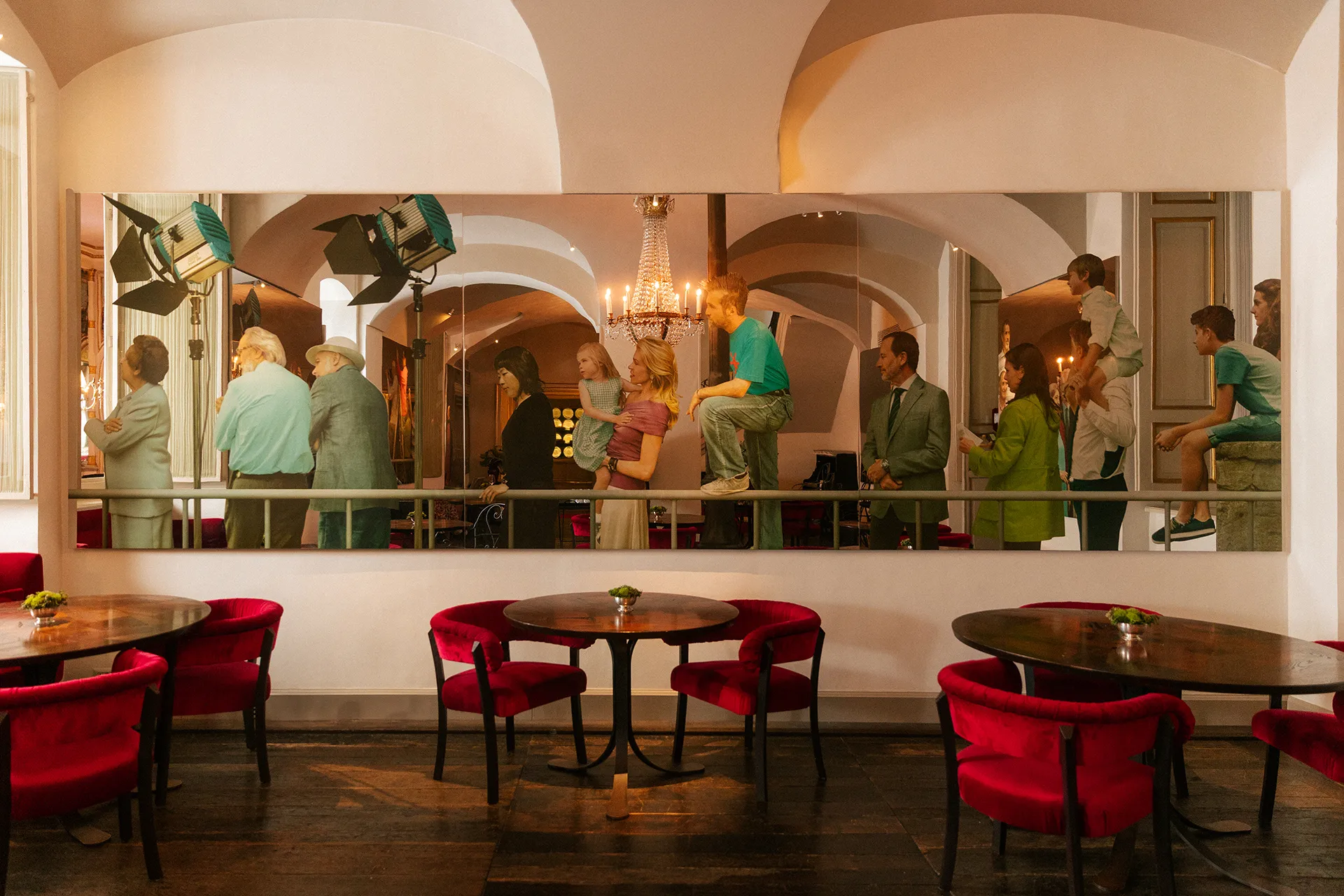
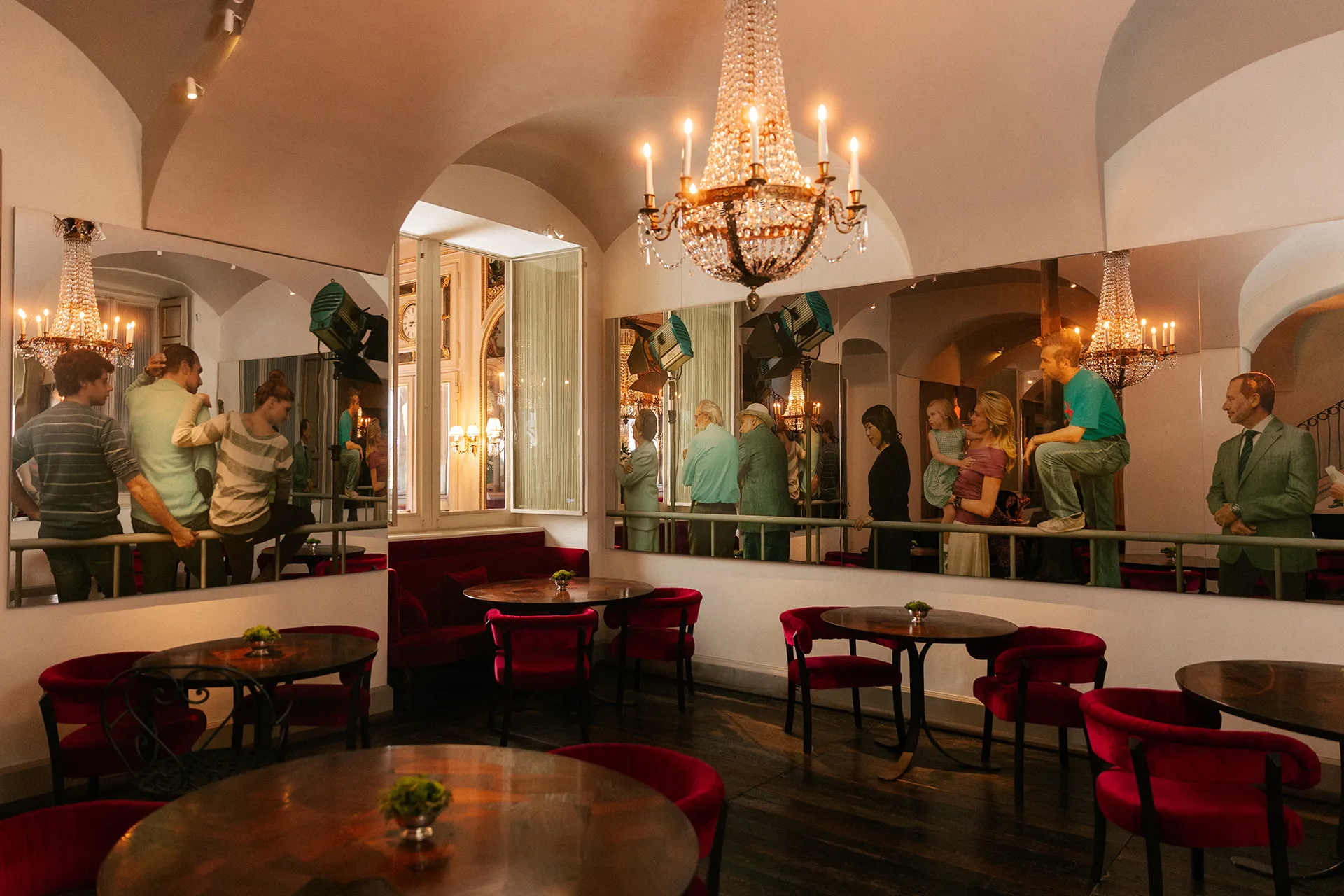
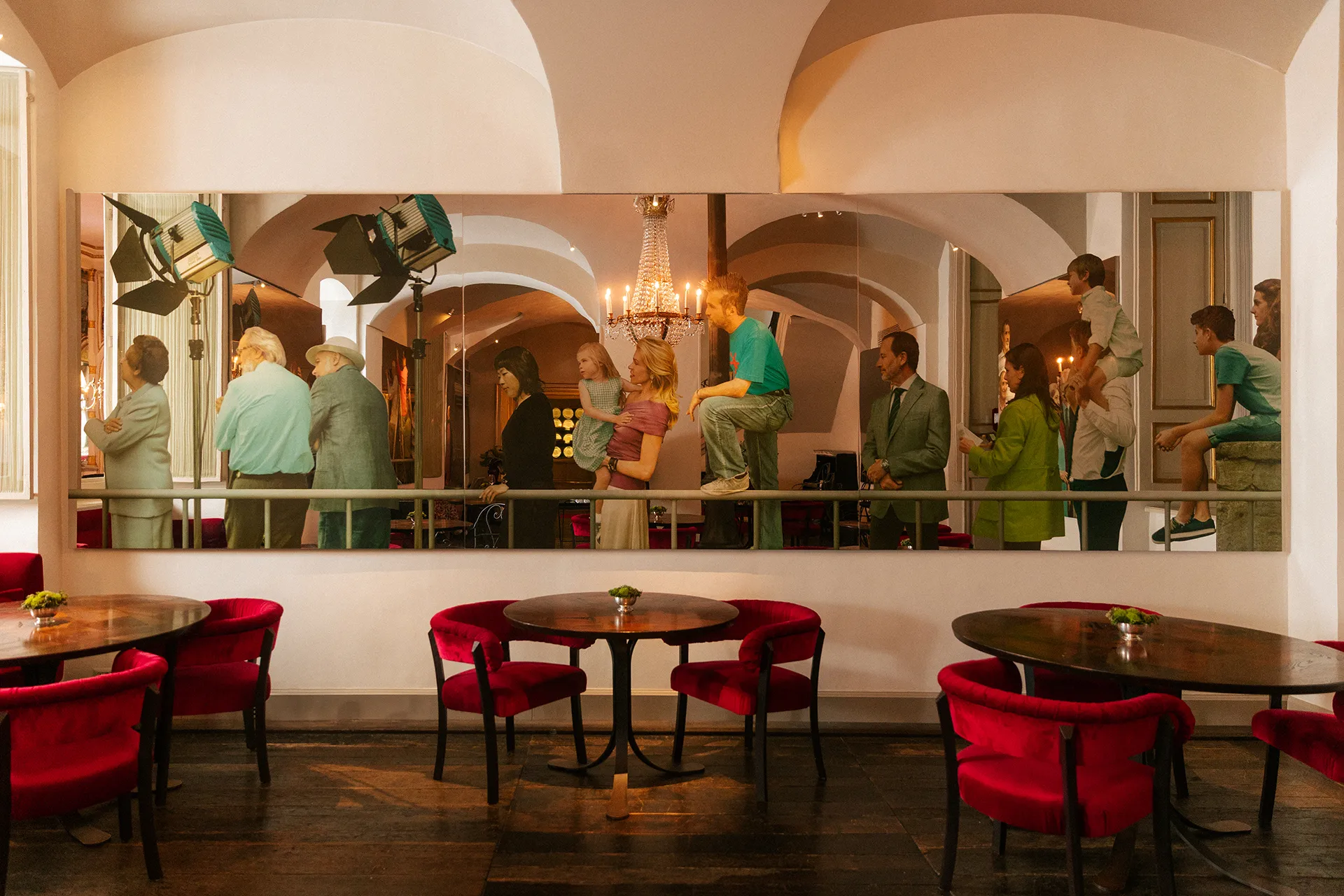
For Del Cambio, Michelangelo Pistoletto conceived a “total” environment made up of eight reflective panels, titled Evento. The figures depicted are “ordinary people from everyday life,” silently witnessing an unseen event. Through their gaze, they enter into an almost poetic dialogue with the audience in the room, who in turn becomes an active, living part of the artwork itself.
Izhar Patkin's works
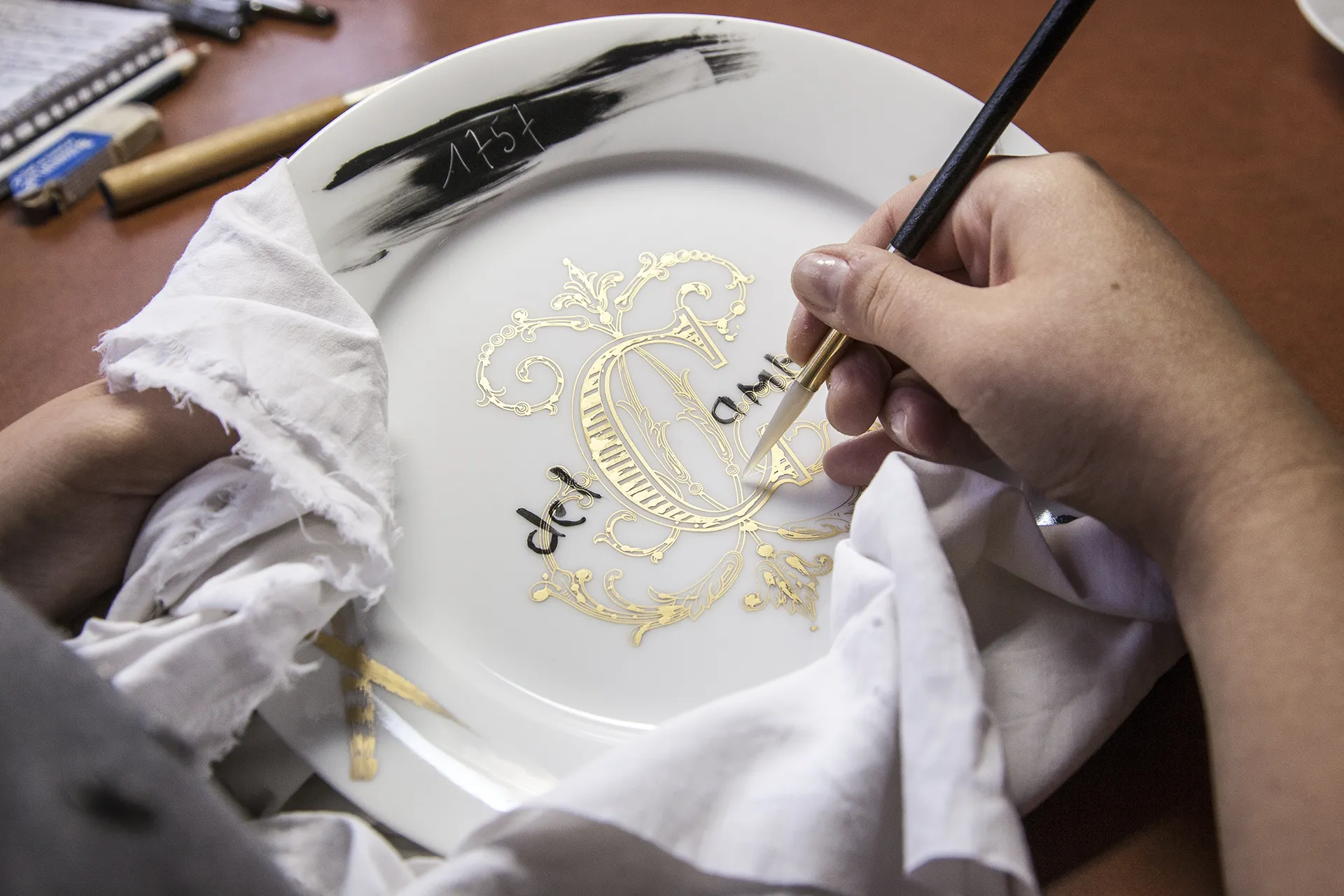
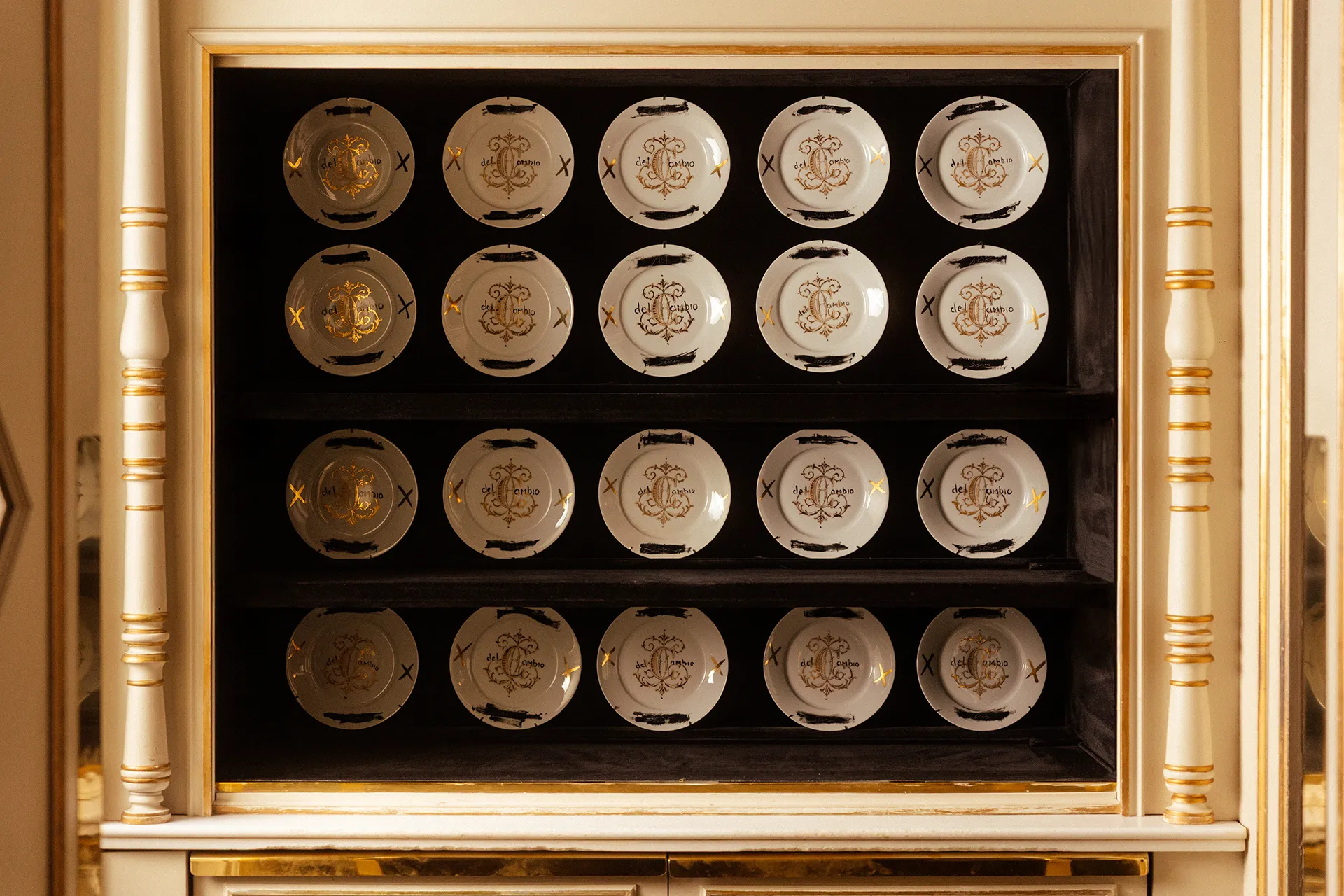
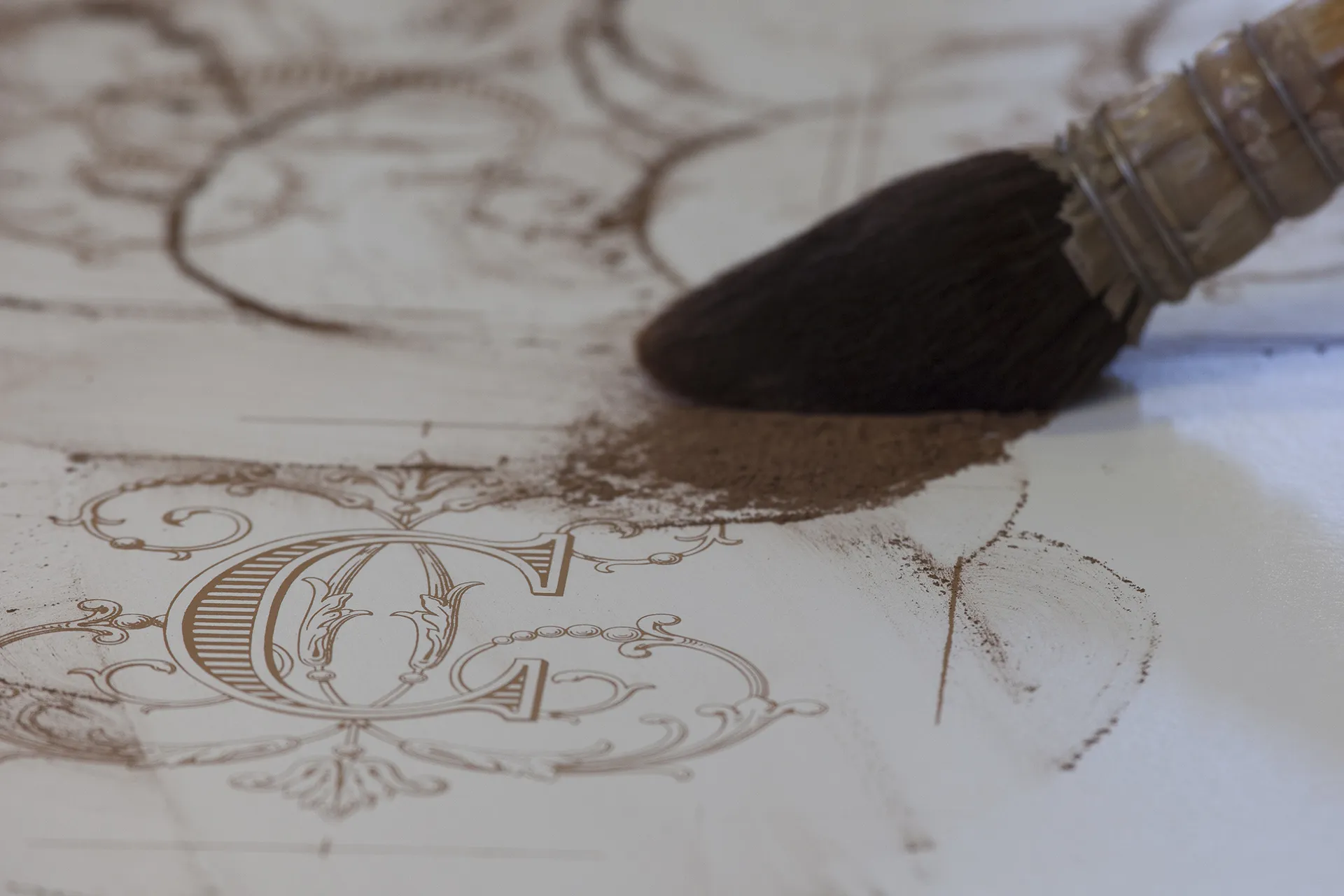
In Sèvres, just outside Paris, stands one of the world’s oldest and most prestigious porcelain manufactories. Each year, around 50% of its production is discarded due to minor imperfections. Through a unique artistic initiative, 200 of these rejected pieces, rejetés, were gifted to Del Cambio. The project, titled Ruins for Del Cambio, was brought to life by the artist Izhar Patkin, who individually transformed each plate into a work of art, paying homage to the restaurant and its history. The central motif in gold was crafted using traditional techniques on an original 18th-century model, later complemented by details in a contemporary style, creating a dialogue between past and present.
Martino Gamper's works
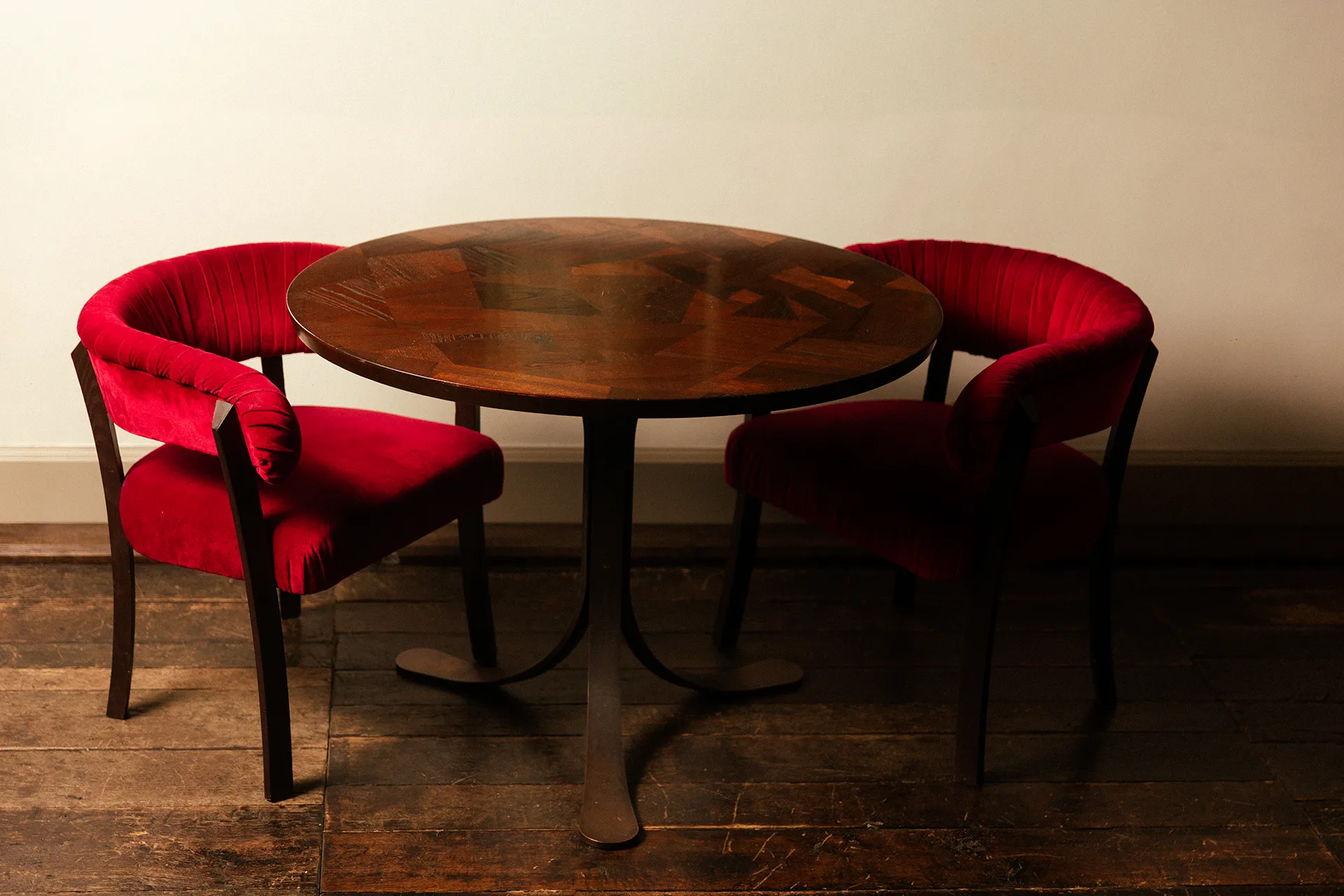
For the Pistoletto Room, Martino Gamper designed the tables and seating. The armchairs, with their clean, embracing lines, create a stylistic continuity with the original décor while expressing a radical modernity in their details. The tables, crafted from alternating cuts of precious and humble woods, contrast the sharp, defined edges of the tops with the fluid, organic lines of the legs, blending tradition and contemporary design in a harmonious dialogue.
Pablo Bronstein's work
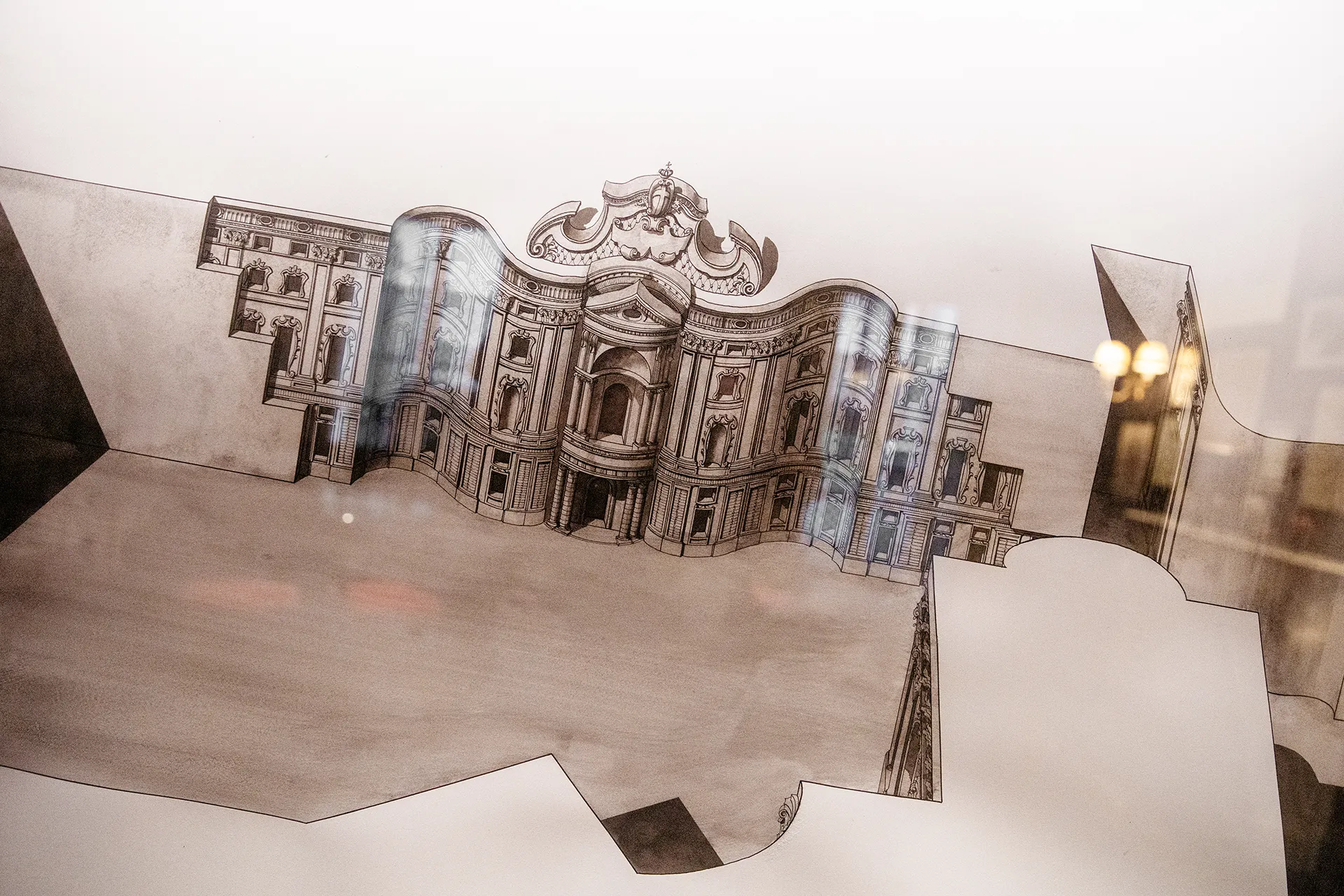
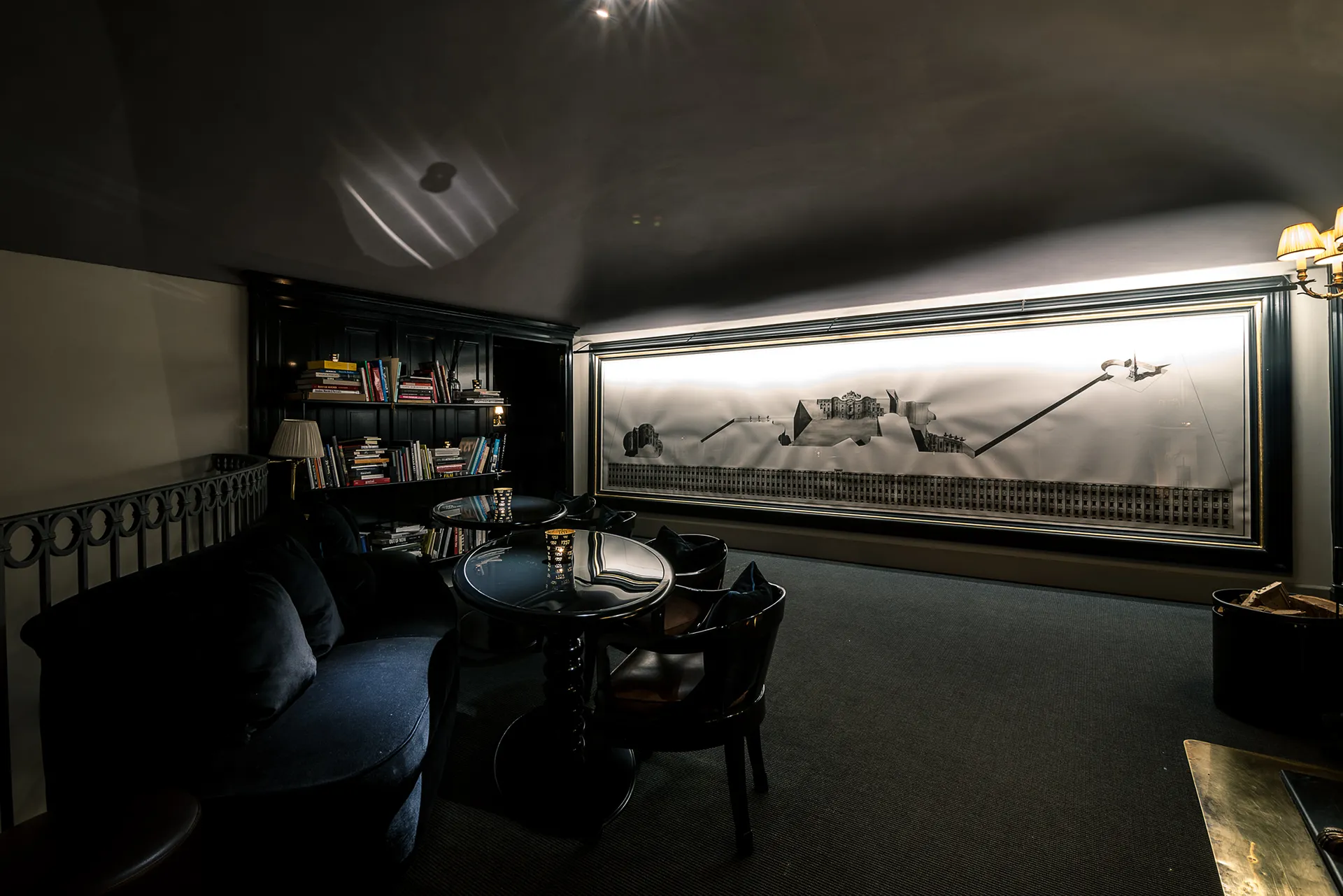
A work of ambitious scale, commissioned from Pablo Bronstein for Bar Cavour, depicts the remnants of an ideal city originally imagined by Guarino Guarini. The vision of the palazzo-città creates a disorienting atmosphere, an impossible interplay between inside and outside, an extraordinary architectural and temporal journey that unfolds within just a few meters.
Arturo Herrera's work
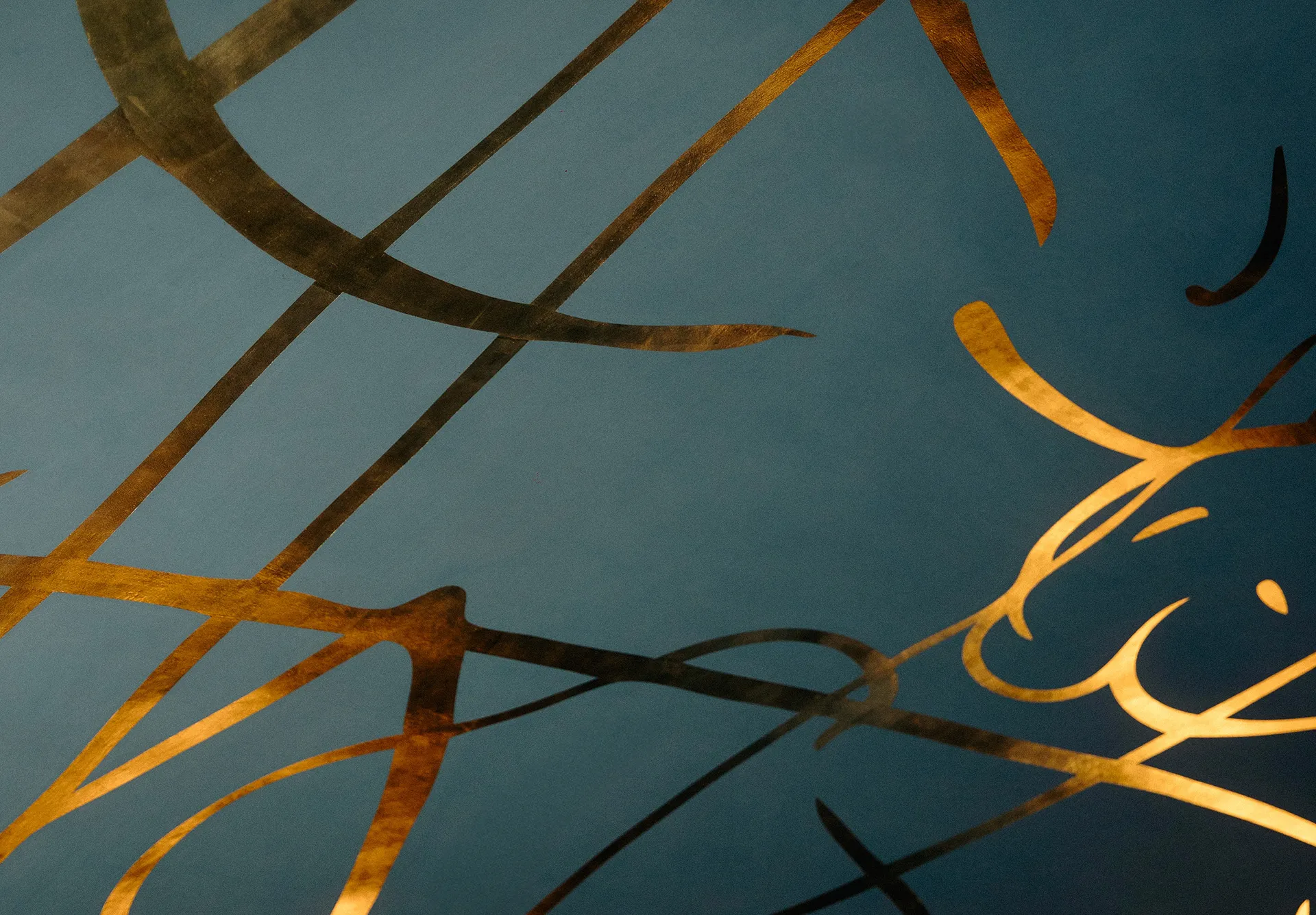
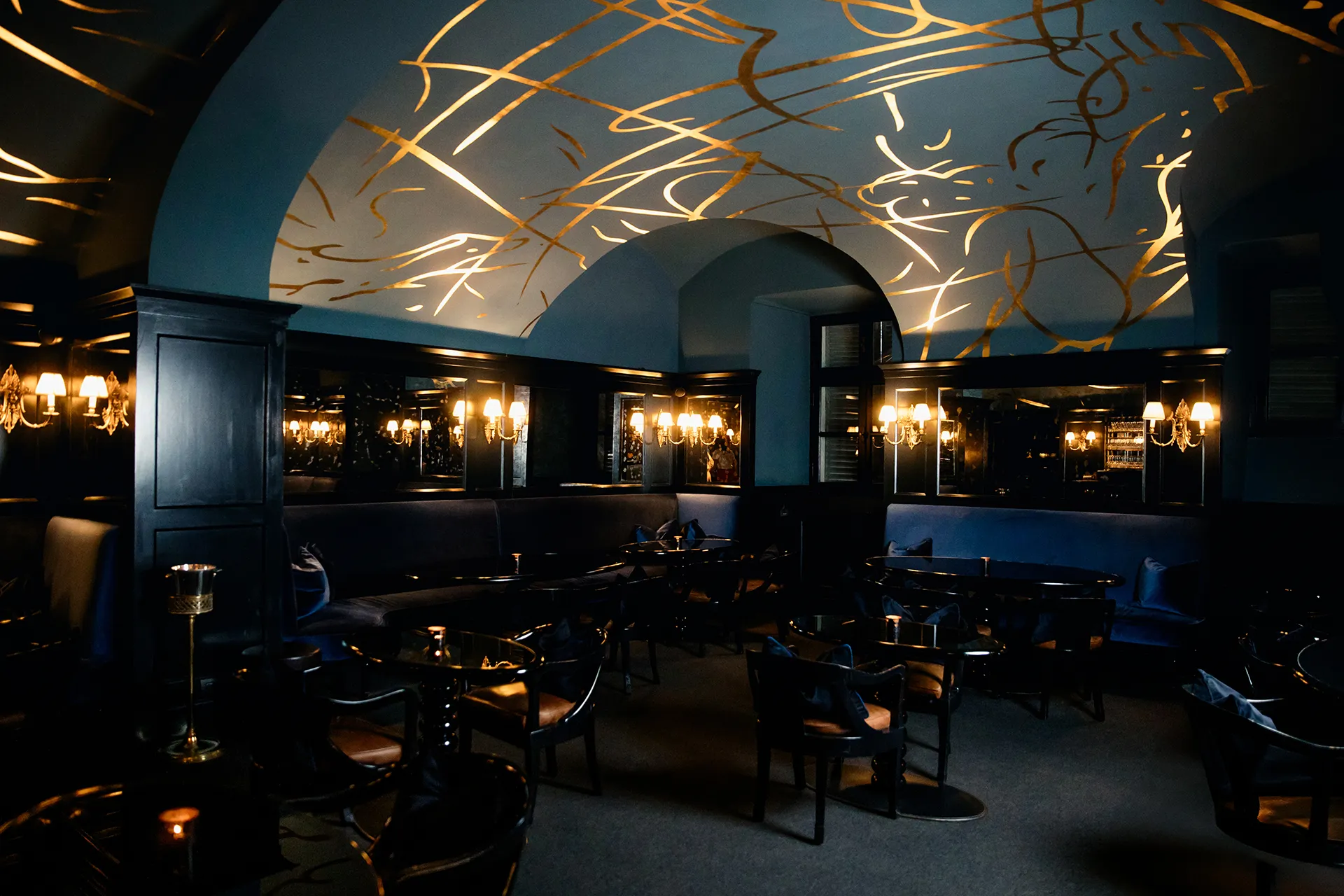
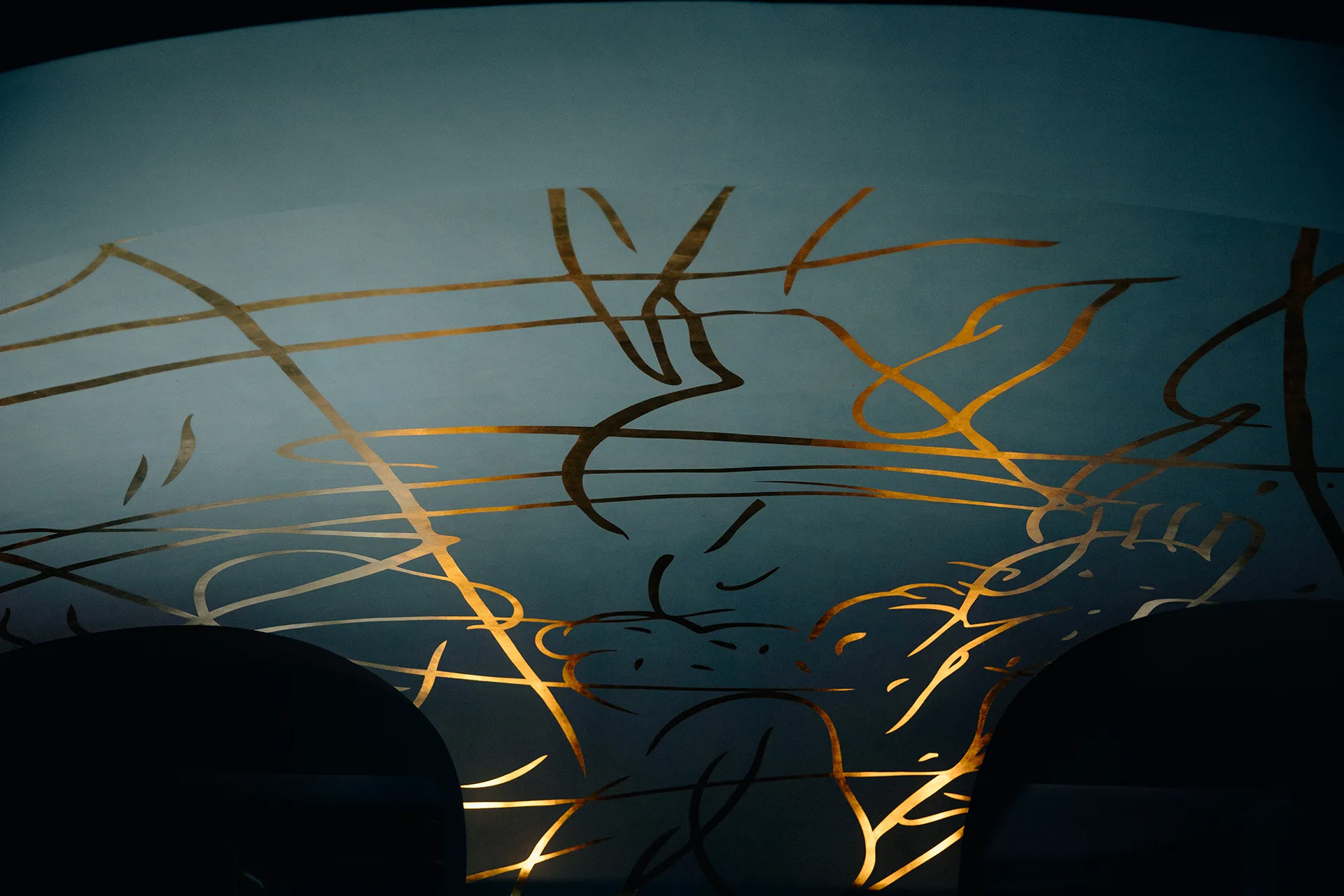
The work Arturo Herrera conceived for Del Cambio is a mural that adorns the ceiling of Bar Cavour. Executed with gold leaf, echoing the precious decorations of the grand hall on the ground floor, the piece is composed of abstract lines that bring a dynamic energy to the space. The artist aimed to create a “total space,” in intimate dialogue with every element of Bar Cavour, merging art and architecture into a harmonious, immersive experience.
Carol Rama's works
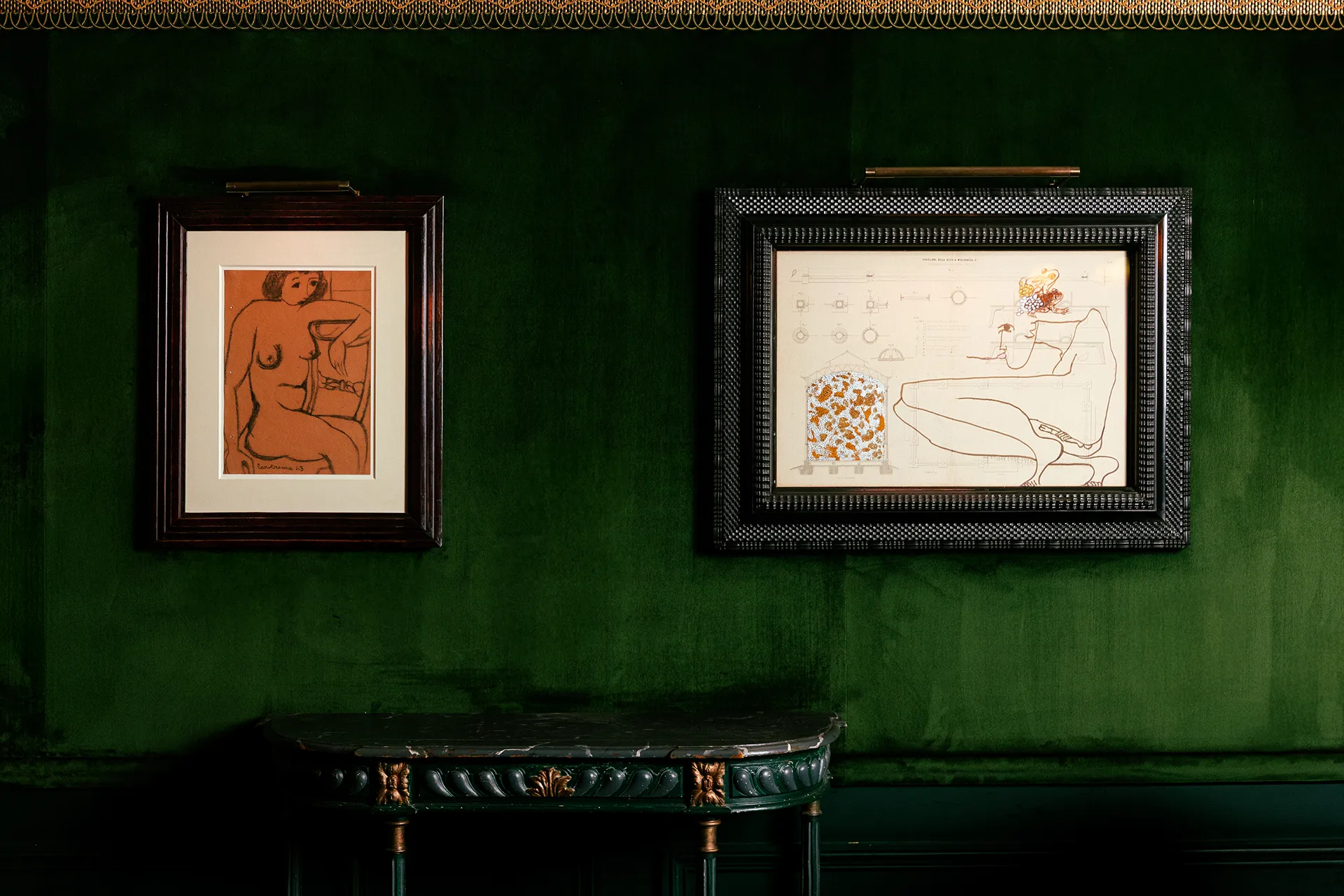
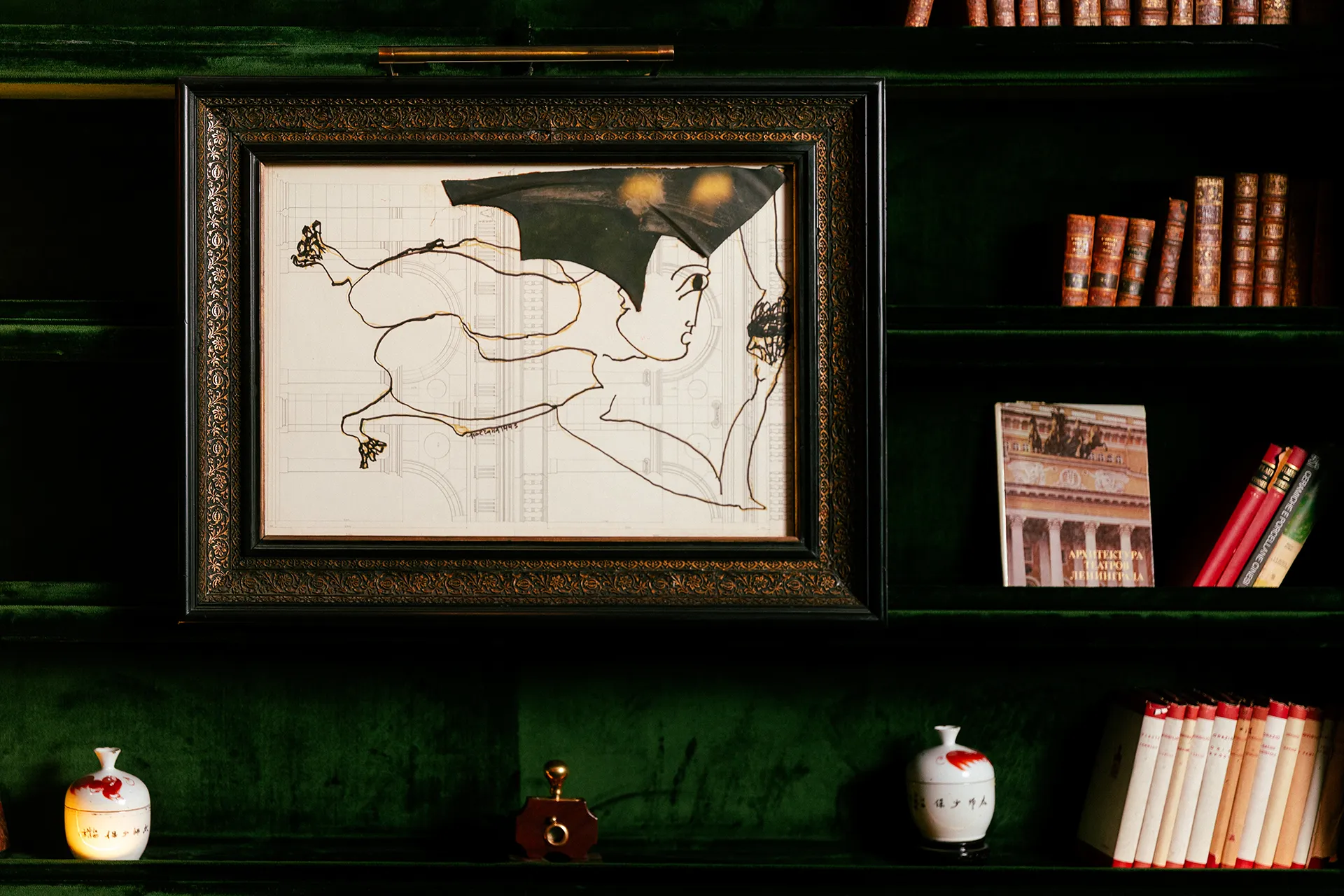
In the evocative Stanza Verde of Bar Cavour, a refined selection of works on paper by Carol Rama finds its home. One of the most radical figures in 20th-century Italian art, Rama created intense, tactile pieces that blend eroticism, personal memory, and formal experimentation, giving rise to a singular visual language. In this intimate and elegant setting, the works engage in a dialogue with the space itself, merging restlessness and poetry to create an immersive, sensory experience.
Giovanni Giani's work
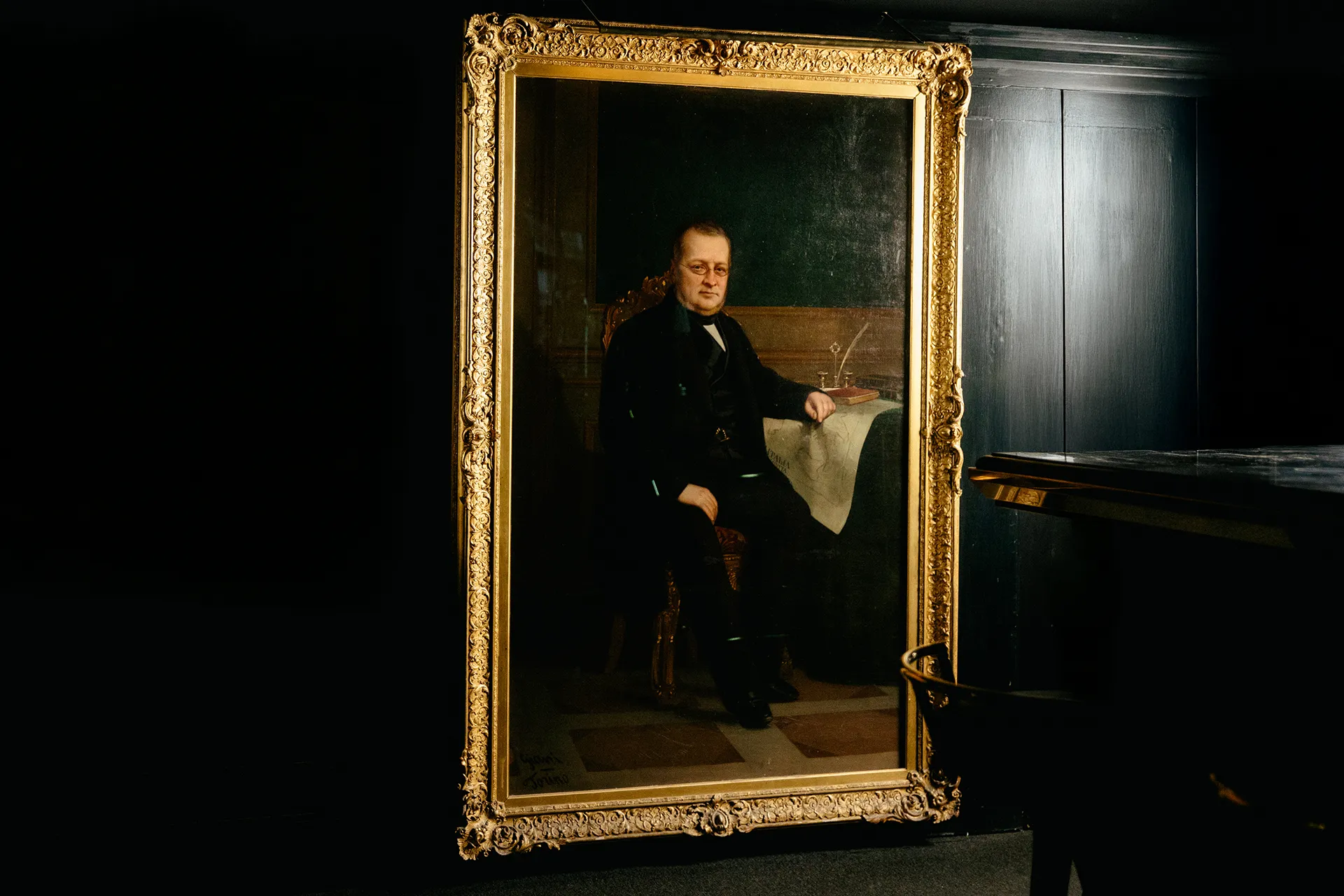
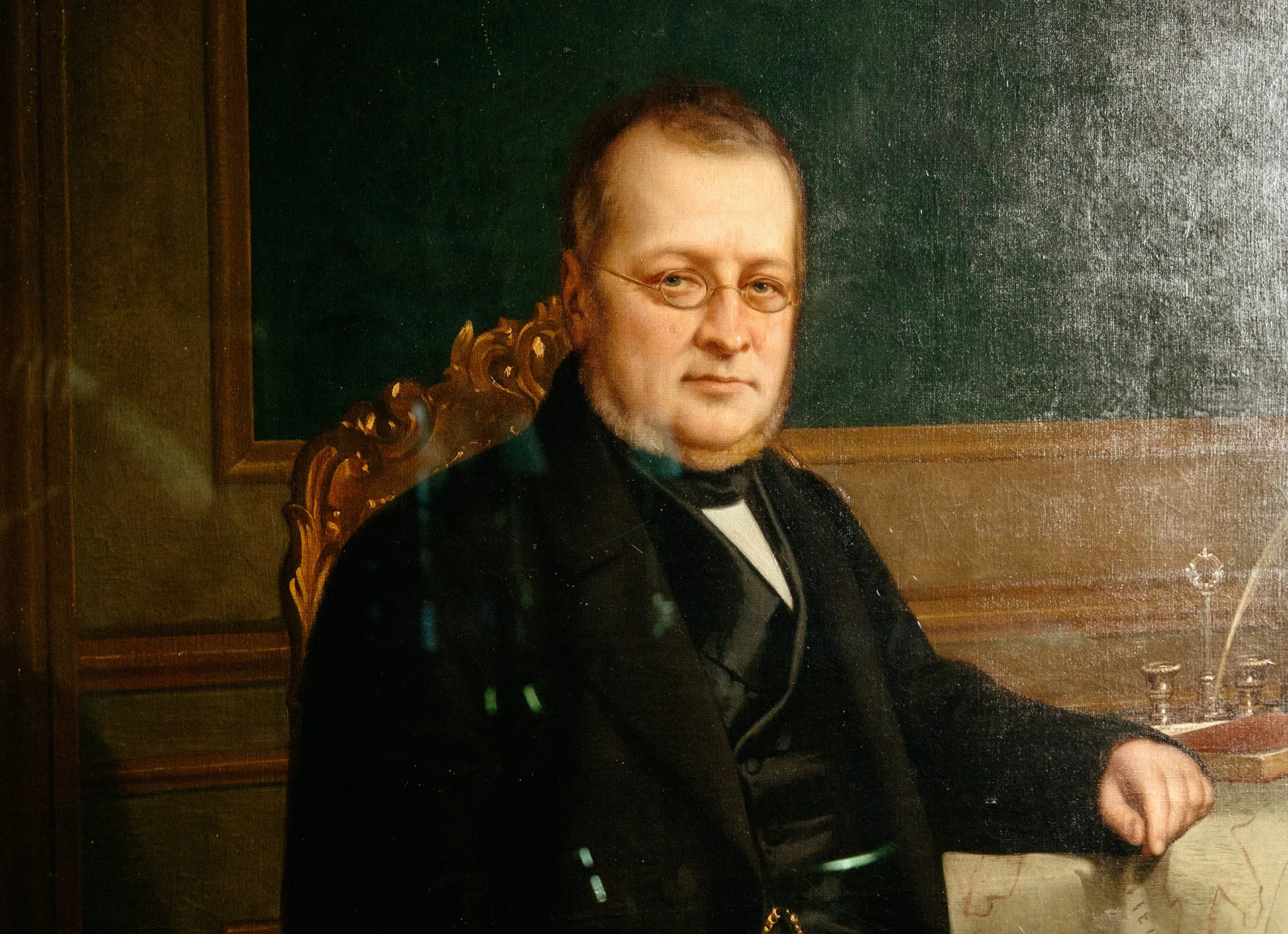
Beside the bar counter hangs the portrait of Count Cavour, an emblematic figure of Del Cambio, painted by Giovanni Giani, a 19th-century Piedmontese artist. Giani’s depiction evokes the presence and aura of the great statesman, a testament to Cavour’s enduring centrality in both Turin’s and Italy’s history.
Piero Gilardi's work
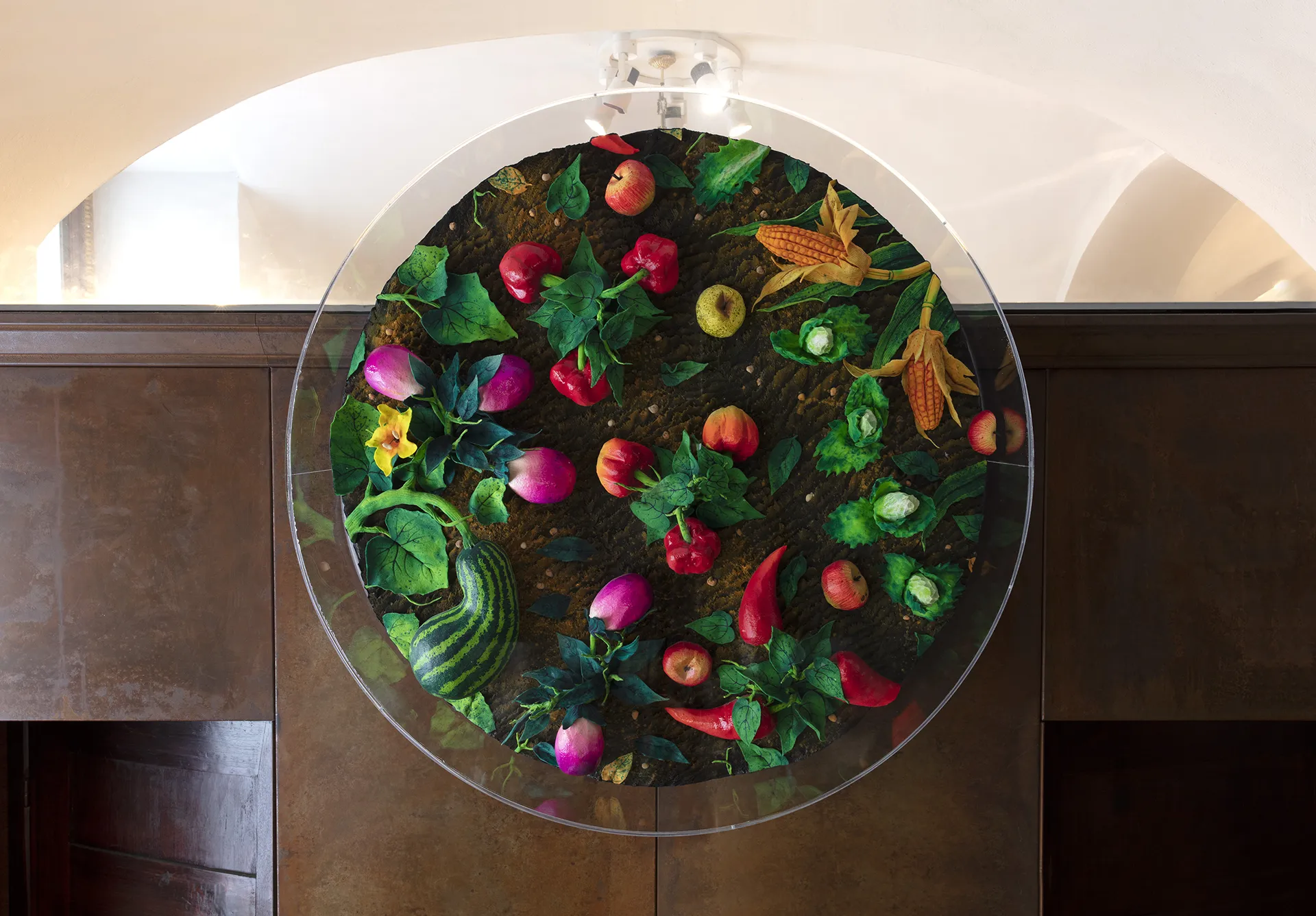
Within the elegant 19th-century setting of Farmacia Del Cambio, Piero Gilardi’s work introduces a striking fragment of artificial nature. Made from expanded polyurethane, the piece is part of Gilardi’s renowned “Nature Carpets” series. Here, it recreates elements of the landscape with extraordinary realism, engaging in a dialogue with the historic space and offering a poetic reflection on the relationship between humanity and the environment.
Matinox kitchen
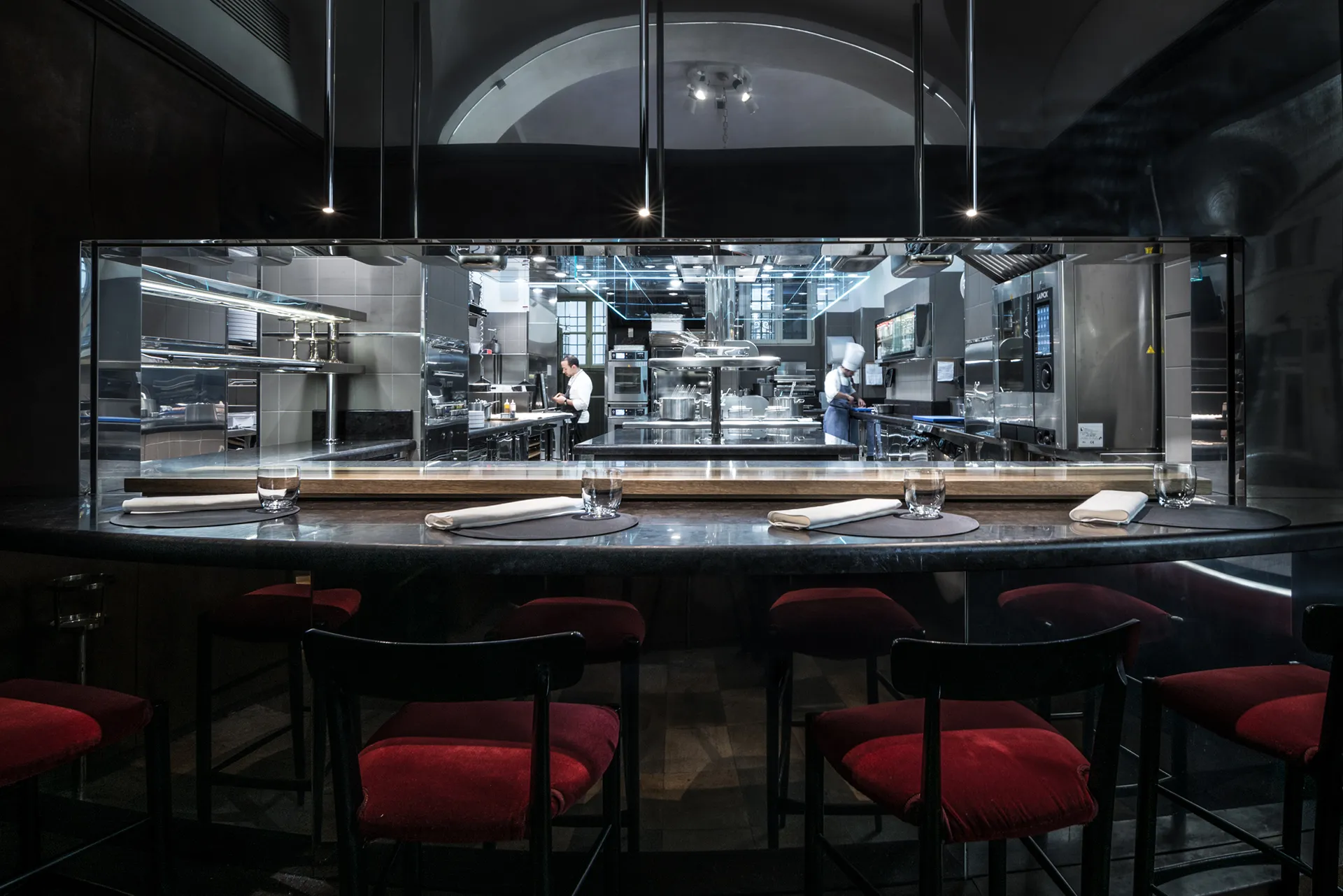
Custom-designed and entirely handcrafted by the prestigious French company Matinox, the kitchens at Del Cambio are a work of contemporary craftsmanship. Today, they form a state-of-the-art workspace where the finest materials and meticulous attention to detail serve the art of cooking, perfectly reflecting the spirit and style of Del Cambio.